Interview
The Dogs Must Bark
by Serge Honegger
In conversation with Serge Honegger, Marco Goecke talks about how the commission for the Heinz-Bosl-Stiftung came about, where the devil cooks his soup, and the special chemistry with the dancers of the Bayerisches Junior Ballett München.
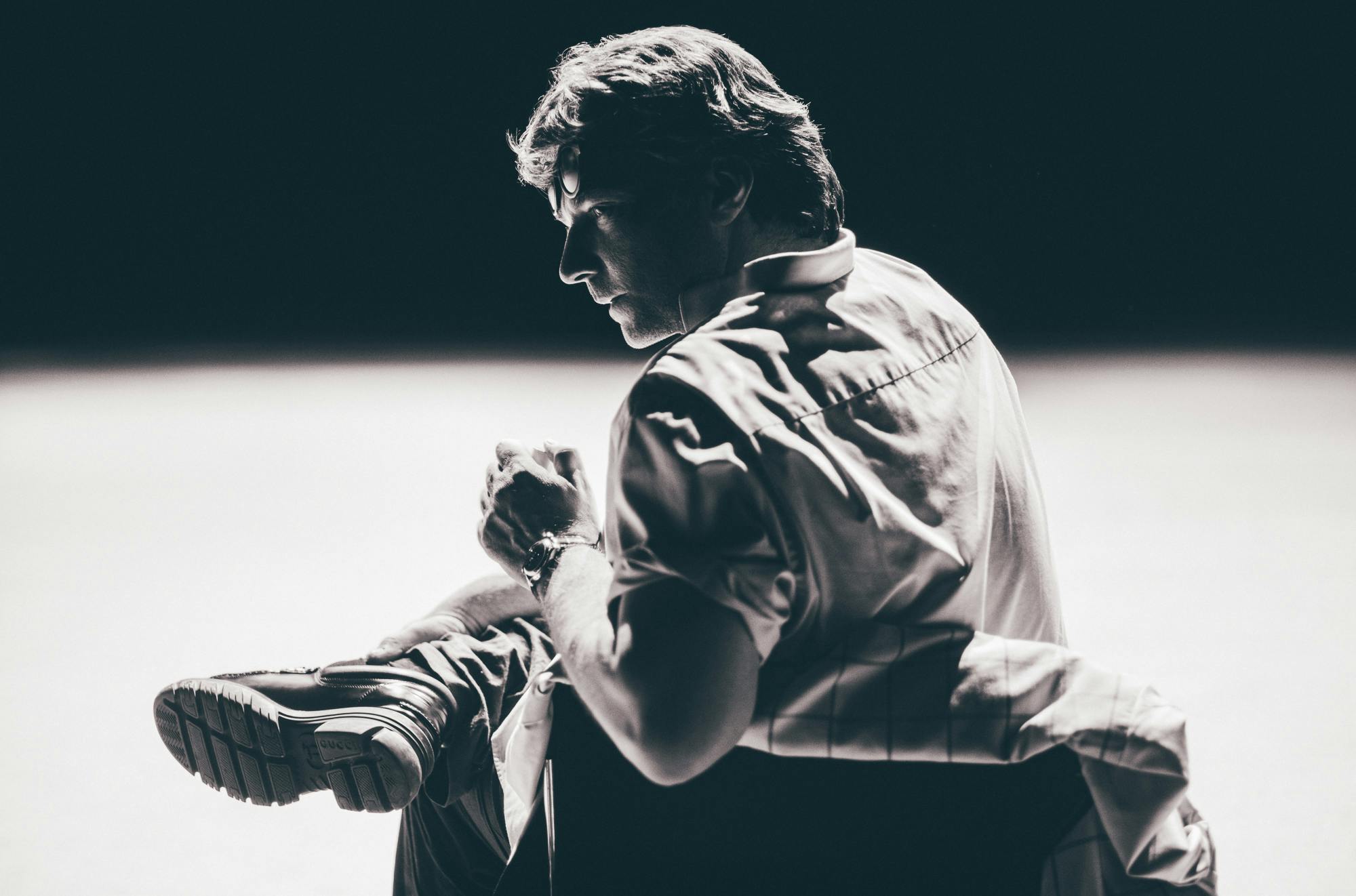
The devil’s kitchen has symbolised hell since the Middle Ages. Is it a place for dance?
The title, which does not have the same connotations in English as it does in German, has several facets for me. These are connected to my personal experiences and reflect different life experiences.
In Munich, the Junior Ballet rehearsed «All Long Dem Day» with great success, and for the Bayerisches Staatsballett you created «Sweet Bones’ Melody». How did the commission for a world premiere for the Heinz-Bosl-Stiftung come about?
When Ivan Liška approached me with the request to create a piece, I hadn’t choreographed anything for a year and a half. After the scandal in Hanover, I was in a state of complete paralysis, just sitting there and mourning the death of my dog Gustav. At the same time, I was already in talks about the ballet directorship in Basel. Meanwhile, my works continued to be performed at various theatres around the world. I replied to Ivan’s message within five minutes. The moment had come to emerge from grief and start a new life.


Over what period of time was the piece created?
We began rehearsals as early as September 2024. There were several phases, and the process stretched over many weeks. Even though some of the dancers had already performed my piece «All Long Dem Day», with such young people you often start again from scratch. But I really enjoyed that!
Isn’t this constant starting over exhausting?
I’ve been doing this profession for 26 years now. In principle, I say yes to everything, because I think: Maybe this is the last choreography I’ll ever be asked to create? Or I think: By the time this project actually happens, I might already be dead and won’t have to realise it at all. So there’s really no reason to worry about saying yes to a project. But then time passes, and suddenly you’re faced with realizsng something you agreed to at a completely different point in your life.
That, too, is a kind of devil’s kitchen…
Of course. But if you want to move forward, you may have no other choice than to enter it. I want to learn something new about myself, to move forward, and to learn something about my own art. That is always a risk. That’s why every piece is a walk into the devil’s kitchen. You are confronted with yourself there. And that’s something we then have to deal with—whether we want to or not. We have only ourselves to blame.
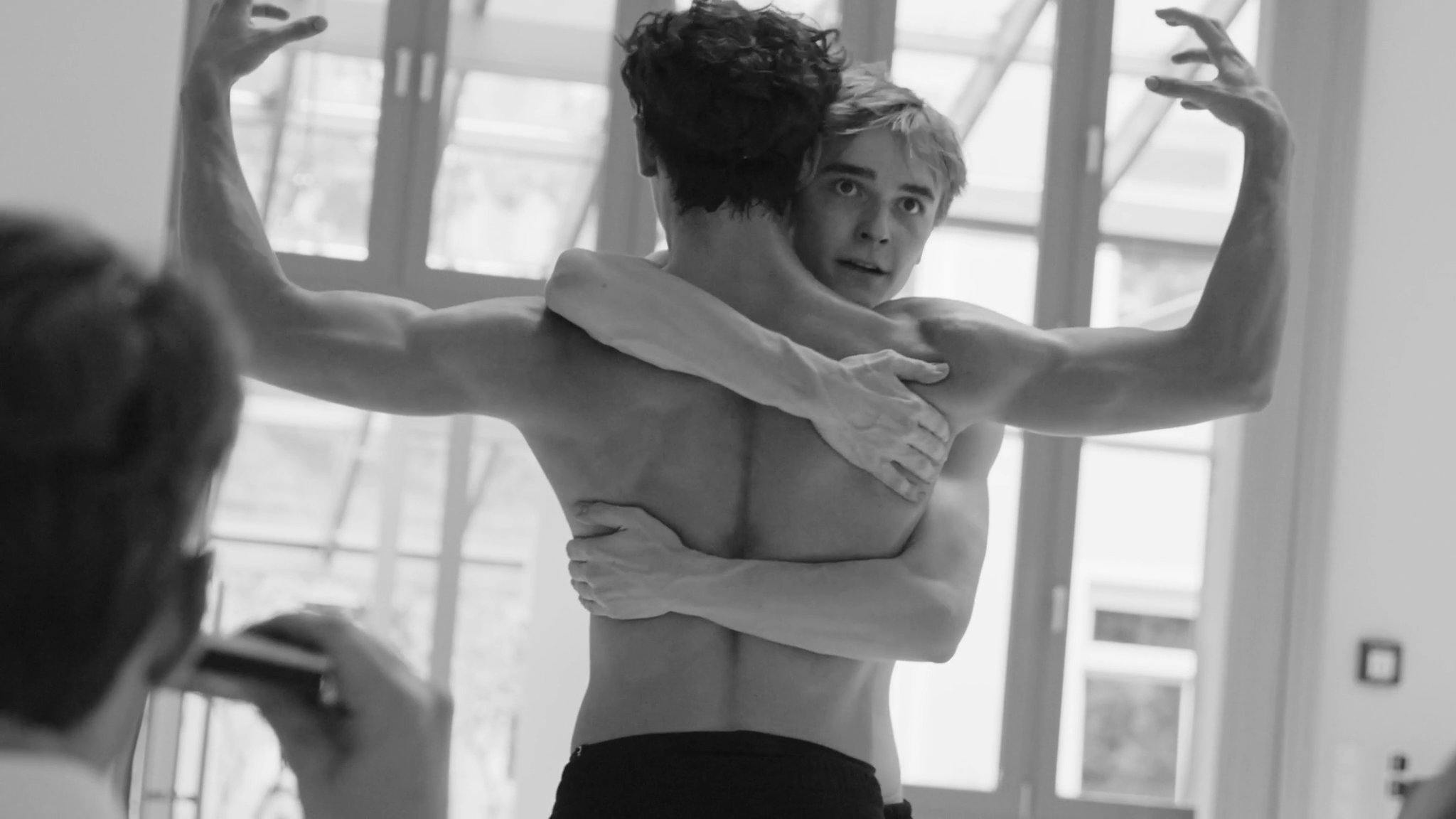
Where do you find the drive to repeatedly put yourself into such an at times hellish situation, as creating a new piece can be?
You know, when I finish a choreography and start a new one, I forget all the despair, the pain, or the fear that I might not even master the craft. It’s like falling in love again and forgetting the heartbreak that shook you not so long ago. In every piece, my fundamental interest is to get closer to people, to learn something about them. There are many emotions involved—feelings of love, feelings of obsession.
And solid ground—where is that?
A kitchen as a place played a very real role in this piece. During the rehearsal period, I lived in the same house where the dancers of the Heinz-Bosl-Stiftung are accommodated. As in any shared apartment, there is a communal kitchen. That’s where we met and talked about who they are as artists; what it feels like for them to audition for other companies; whether someone in the ballet world is waiting for them, and so on. These are all questions one knows when looking back on one’s own youth.
How much reality can a ballet studio tolerate? Doesn’t this aspect of life have something disillusioning about it when it comes to dancing?
Sometimes I want to say to these young people: “You don’t know it yet, but soon you will: out there, everything is the devil’s kitchen! Hopefully, in your life you’ll find a choreographer who truly sees you and doesn’t just put you in the last row, where no one can see you.” But I hold back. There’s no point in warning them about setbacks and disappointments. I want to encourage them and strengthen them on their path. That’s the beautiful thing about getting older: giving becomes more important.


You have a talent for creating a very motivating atmosphere in rehearsals. You even get the dancers to turn into barking dogs?
That such a process gets underway has to do with the fact that I also reveal a lot of myself. But at the same time, after every rehearsal I walk out and ask myself: What kind of profession is this, actually? I’m exhausted after just a few hours in the studio…
The movement material in Devil’s Kitchen strikes me as very multilayered. There’s no sense of strain, even though the roles are certainly not easy to dance
That has to do with the dancers. I am always touched by how willing they are to give so much of themselves and to engage in the artistic process. I’m not a devil who extracts commitment from them. This generosity comes from them. You can’t plan that. There has to be a certain chemistry.
And that chemistry probably isn’t the same in every ensemble…
With this piece, there was a special situation. Perhaps it arose from the fact that I was able to spend time with these young people in the kitchen. I had a bit more freedom than usual and could be more patient. I made a special effort to take them along on the journey. Some certainly enjoyed this time; others may only realize in 30 years that we shared a meaningful chapter of our lives.
Did you transform into your former self when you lived in the dancers’ shared apartment for a few weeks?
Of course I remember what it was like when I studied in Munich many years ago and partied with the others on Wilhelmstraße. Back then, I was exactly the same age as the dancers of the Heinz Bosl Foundation are now. We didn’t rehearse in the same spaces, but in the dancers I see what I was and what I wanted to be. Now I’m simply older. That’s sometimes hard to accept. When the wish arises for things to be different, you’re already in the devil’s kitchen.
Doesn’t that pain also have its own beauty?
There were moments in rehearsals when I saw someone dance, and it was as if I were watching my younger self. This dancer was exactly how I would have wished to dance.
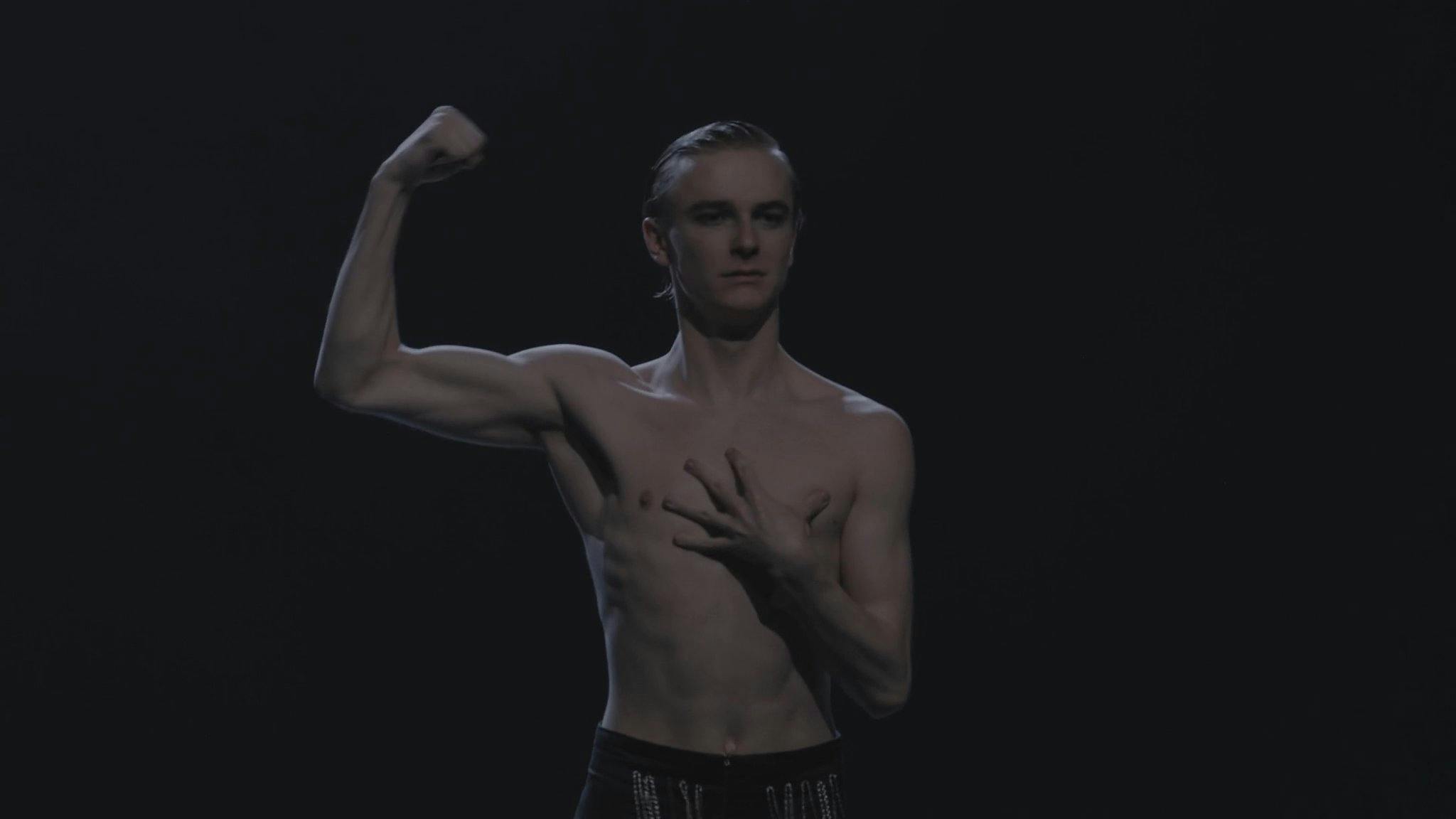
Does the title Devil’s Kitchen suggest a program or a specific dramaturgy?
There is no storyline in this piece. There isn’t even an idea—and that’s a good thing. We develop material together, we listen to music, we search for a form. In such an abstract piece, all I care about is what we share together in the process.
And you chose extremely significant music for it…
Pink Floyd’s songs are a world of their own. They created something that goes far beyond most of what rock and pop music has produced. I’ve made pieces to many composers—from Ligeti to Unsuk Chin to Nina Simone—but I had never choreographed to Pink Floyd before. As I immersed myself in this musical world and also read people’s comments on YouTube about the song Dogs, I realized how much this music has meant—and still means—to so many people.
In a kitchen, cooking takes place—and in a devilish one perhaps especially intensely. Do you see a kinship between cooking and choreographing?
When I assemble the individual parts of a piece, I often tell the dancers that I’m now cooking my soup. It’s about mixing the different ingredients. Afterwards, you have to taste it. The steps are the ingredients. But without the dancers, there is no dance piece. Everything depends on them.
Now you’ve all more or less left the devil’s kitchen. The choreography is finished. How do you look back on it?
This piece is very important to me. We lived together, we experienced something together, we shared the kitchen, we hung out together. In this devil’s kitchen, we all left behind an important part of our lives.
These contents might also interest you


